.svg?w=300&h=85)
.jpg?w=1472&h=1104)
When your fingertips glide across silk’s delicate texture, you feel more than cloth — you touch a cultural memory spanning five millennia. Since ancient China, this lustrous, supple fibre has transformed dress, reshaped aesthetics and inspired trade routes that linked the whole of Eurasia.
Silk Origins: Where Myth Meets Archaeology
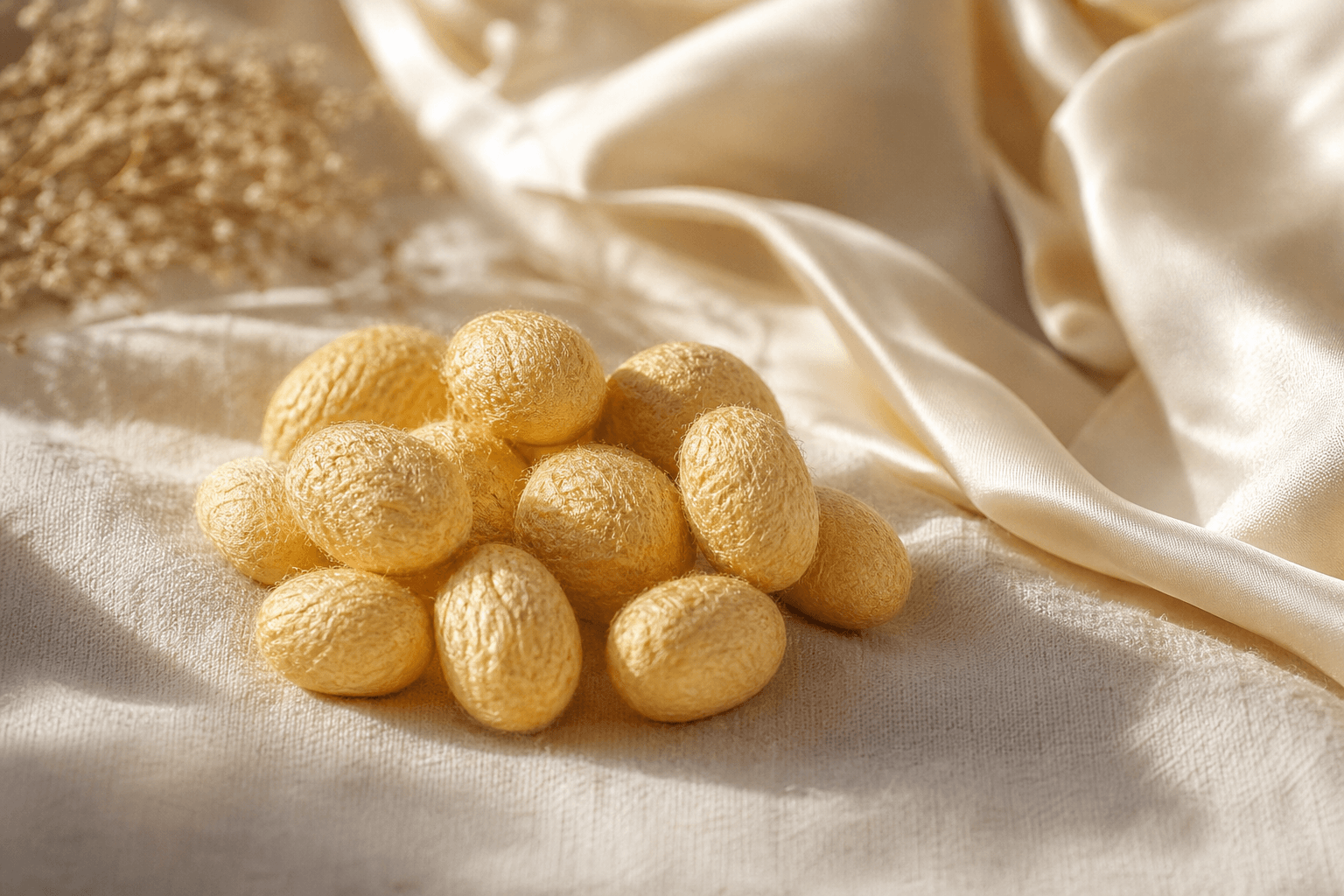
Legend claims that around 2700 BCE, Empress Leizu was strolling in her garden when a silkworm cocoon fell into her hot tea; the filament unfurled into a glistening strand and she discovered how to reel silk, earning the title “Silkworm Goddess”.
Though unverified, silk fragments unearthed in Zhejiang and Henan date back four to five thousand years and prove that early Chinese communities had already mastered sericulture, even if the true inventor remains unknown.
From Imperial Privilege to Popular Elegance
During the pre-Qin era and the Han dynasty, silk was an exclusive treasure of emperors and nobles. “Pay taxes in silk, reward in silk”, records the Book of Han, showing its role as currency.
As weaving and dyeing advanced, merchants and scholars could don silk from the Tang and Song periods onwards; by the Qing, restrictions eased further and silk became a daily marker of refinement for prosperous households.
Going Global: The Silk Road
Chinese silk fibres have been identified in Egyptian tombs as early as the 11th century BCE. In 130 BCE Emperor Wu of Han opened the Silk Road, linking Chang’an to the Mediterranean and turning silk into a symbol of wealth and status.
Over the following centuries, Korea, Japan, India, Persia, Byzantium and Europe all learnt sericulture, each developing distinctive silk traditions.
The Birth of a Silk Thread
Mulberry silkworms feed on fresh leaves and, after four moults, spin cocoons. A single premium cocoon can yield 300–900 metres of continuous filament (China Sericulture Science, 2022). Boiling softens sericin; reeling, twisting and plying then create diverse fabrics such as satin, crepe and gauze.
Mulberry silk is a natural protein fibre, fully biodegradable. Per equal weight, it usually demands less land and chemicals than cotton, though its carbon footprint depends on local energy and processing methods.
Silk Styles Around the World
- • Nishijin-ori, Japan: complex jacquard weaves create deep, layered patterns.
- • Banarasi brocade, India: opulent motifs woven with gold and silver threads.
- • Su embroidery & Song brocade, China: painterly stitches and shaded colours embody Eastern aesthetics.
Cultures express silk in unique visual languages, yet its innate glow and grace remain unmistakable.
Modern Value
- • Home comfort: high-thread-count silk bedding offers cool summers and cosy winters, balancing body temperature.
- • Skin & hair care: low friction minimises fine lines and tangles; its protein structure discourages mites.
- • Tech innovation: fibroin’s excellent biocompatibility suits surgical sutures and tissue-engineering scaffolds.
Why Choose TOWNSSILK
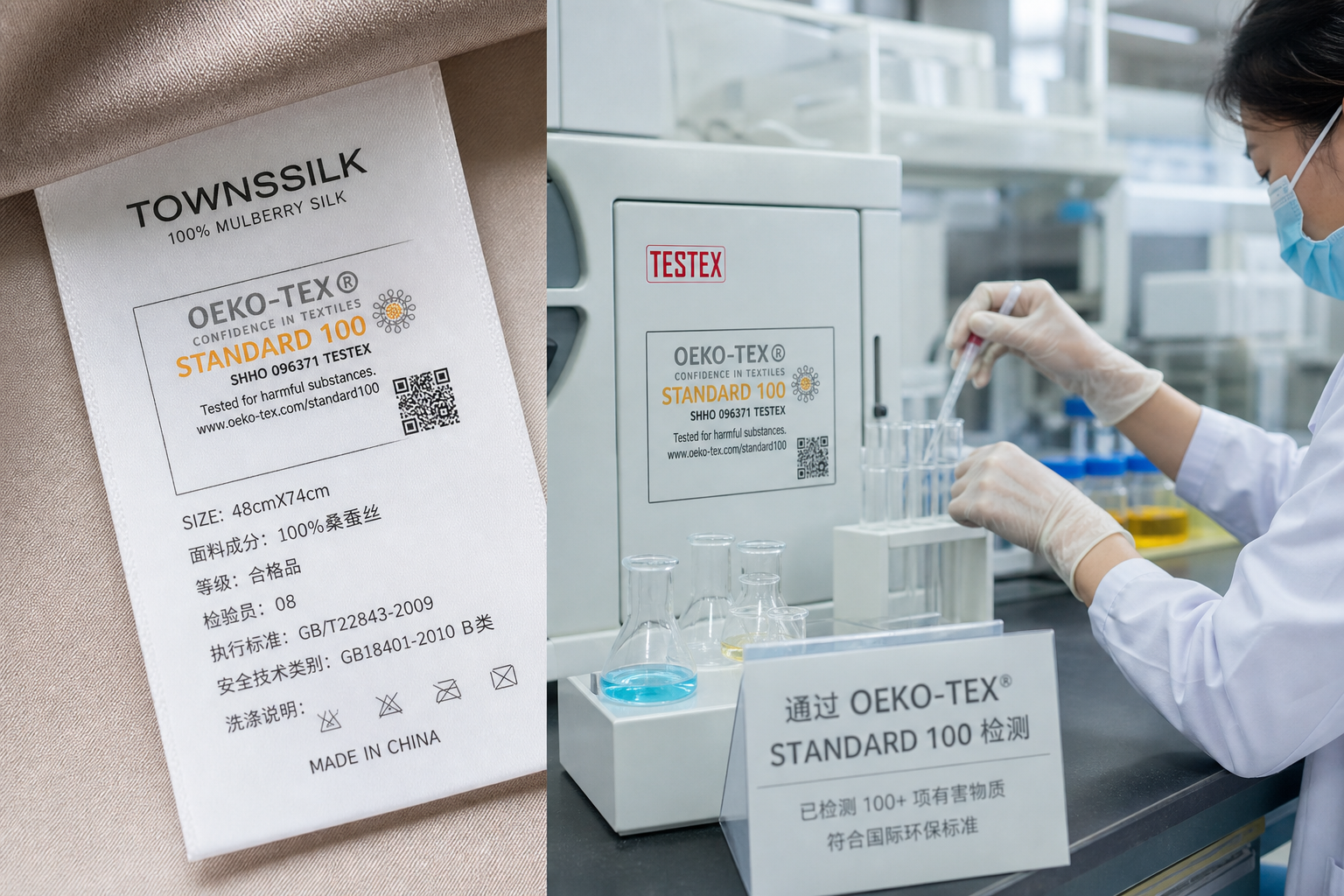
- Material: exclusively 6A-grade, internationally certified mulberry silk with even denier and natural sheen.
- Craft: temperature- and humidity-controlled reeling and finishing preserve sericin, enhancing suppleness and durability.
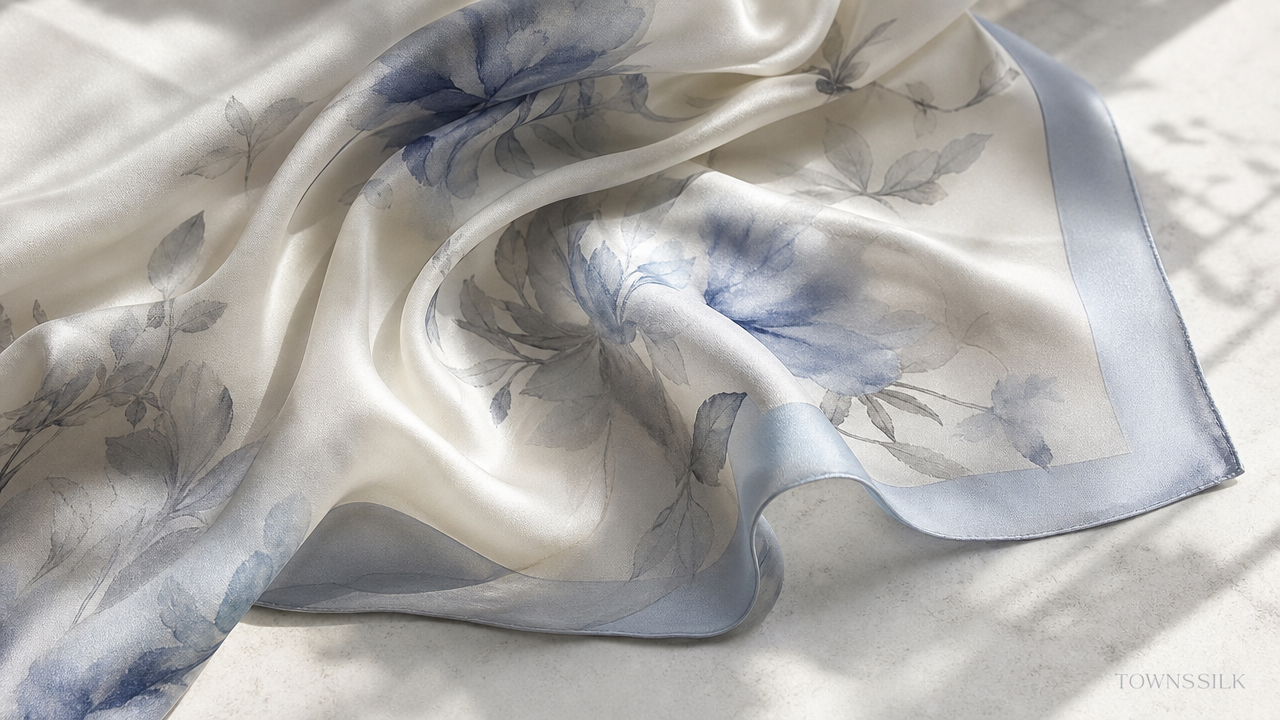
- Design: minimalist lines meet Oriental motifs, suiting business, home and travel.
- Sustainability: non-toxic dyes, 30 % renewable energy in production, and packaging that is 90 % FSC-certified paper.
TOWNSSILK weaves inches of silk into your everyday life, blending Eastern warmth with global chic — each touch is a reward to yourself.
Conclusion
From the teacup cocoon of legend to the soft lustre at your fingertips, silk has redefined luxury and comfort for millennia. If you seek a gentle pause amid daily rush, TOWNSSILK stands ready to restore silk’s quiet elegance to you.
Explore the full range of TOWNSSILK silk bedding and apparel and let luxury become your everyday.
.png?w=1536&h=1024)